If you work in bathroom products distribution, you’ve probably noticed something interesting over the past few years: demand for smart bathroom solutions is rising almost everywhere—but the product mix varies dramatically by region.
For wholesalers, importers, and brand owners, one question comes up again and again:
Should we focus on Smart Toilets O Bidet Toilet Seats?
From a B2B perspective, this is not just a product comparison. It’s a supply chain, logistics, pricing, and market-fit decision. Let’s break this down in a practical, distributor-focused way.
Why the Market Is Splitting Into Two Categories
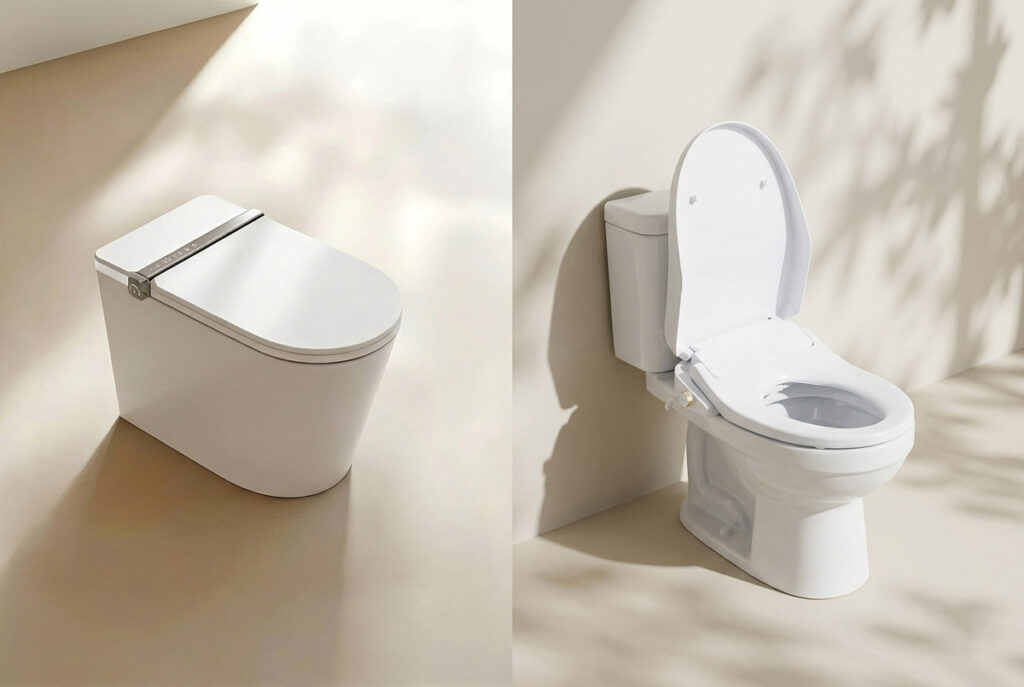
Globally, the “smart bathroom” category is no longer a single product segment. Instead, it has evolved into two distinct commercial tracks:
- Fully integrated Smart Toilets
- Electronic Bidet Toilet Seats (Smart Toilet Seats)
Both offer advanced hygiene and comfort features. But from a wholesale and importing perspective, they behave like completely different product categories.
Quick Comparison Overview
| Category | Smart Toilet | Bidet Toilet Seat |
|---|---|---|
| Product Type | Fully integrated toilet system | Add-on electronic seat |
| Shipping & Logistics | High freight cost, bulky | Compact, cost-efficient |
| Installation Complexity | Professional installation required | DIY / simple installation |
| Retail Price Range | High-ticket product | Mid-range / mass market |
| Market Adoption Speed | Slower but premium | Fast and scalable |
This table alone explains why distributors often carry both — but prioritize them differently depending on market maturity.
Understanding the Smart Toilet (Integrated Unit)
A Smart Toilet combines the ceramic toilet and intelligent functions into a single product. These are the premium flagship models of the industry.
Typical features include:
- Automatic flushing
- Auto open/close lid
- Heated seat
- Warm air dryer
- Deodorization
- Night light
- Remote or side control
- Smart sensors and energy-saving modes
In Asia and high-end property markets, these products are already mainstream. In Europe, North America, the Middle East, and emerging markets, they are still considered premium upgrades.
Why Distributors Choose Smart Toilets
1. Higher Unit Value
For importers and wholesalers, the most obvious advantage is higher average selling price (ASP).
Smart toilets position your catalog into the premium bathroom segment.
2. Strong Branding Potential
Retailers and showroom partners love flagship products.
A full smart toilet creates a “wow effect” in displays and marketing.
3. Growing Demand in Real Estate Projects
Smart toilets are increasingly specified in:
- Hotels
- Luxury apartments
- Renovation projects
- High-end residential developments
For project-based B2B sales, this category is extremely attractive.
Challenges to Consider
From a supply chain perspective, smart toilets are not frictionless products:
- Higher shipping volume and freight costs
- More complex certification requirements
- Longer installation time
- Higher after-sales service expectations
These factors slow adoption in price-sensitive markets.
Understanding the Bidet Toilet Seat (Smart Toilet Seat)
The Bidet Toilet Seat is the quiet growth engine of the global smart bathroom market.
Instead of replacing the toilet, it upgrades the existing one. This makes it one of the most practical products for distributors and importers.
Common names used in different markets include:
- Electronic bidet seat
- Electric bidet seat
- Smart toilet seat
- Heated bidet seat
- Washlet-style seat
Despite the different terms, they refer to the same product category.
Why Bidet Seats Are Scaling Faster Globally
1. Logistics Efficiency (Huge for Importers)
From a wholesale and shipping perspective, this category is extremely efficient:
- Smaller carton size
- Higher container loading quantity
- Lower shipping cost per unit
- Easier warehouse storage
For distributors, this directly improves inventory turnover and margins.
2. Faster Market Education
Consumers don’t need to replace their toilet.
They only need to upgrade the seat.
This dramatically reduces purchase resistance.
In many Western markets, the typical consumer journey looks like this:
- First purchase: Bidet Toilet Seat
- Future upgrade: Smart Toilet
For distributors, bidet seats often act as the market entry product.
3. Easier Certification and Installation
Compared with full smart toilets, bidet seats typically:
- Require fewer plumbing changes
- Install in under 30 minutes
- Fit most standard toilets
This reduces return rates and after-sales support costs — a major B2B advantage.
Margin Strategy: How Many Distributors Position Both
A common wholesale strategy looks like this:
| Product Role | Category |
|---|---|
| Entry-level smart bathroom product | Bidet Toilet Seat |
| Mid-range upgrade | Advanced bidet seat models |
| Premium flagship product | Smart Toilet |
This “ladder strategy” allows distributors to serve:
- E-commerce customers
- Retail stores
- Contractors
- Project buyers
All within one coherent product ecosystem.
Why Manufacturers Matter in This Decision
Choosing between categories is only part of the equation.
Choosing the right manufacturer and supplier is equally critical.
Reliable factories must provide:
- Stable quality control
- Flexible OEM/ODM capability
- International certifications
- Consistent production capacity
- Long-term product roadmap
This is where working with experienced suppliers like Myway Smart becomes strategically valuable for distributors building long-term product lines.
The Bottom Line for Global Distributors
Here’s the practical takeaway:
- Smart Toilets = Premium positioning + project opportunities
- Bidet Toilet Seats = Volume sales + fast market penetration
The most successful importers don’t choose one over the other.
They build a balanced smart bathroom portfolio that matches their market’s maturity and pricing expectations.
As global awareness of hygiene, comfort, and sustainability continues to rise, both categories will keep expanding — just at different speeds and in different segments.
For distributors and wholesalers, understanding this distinction is the key to making smarter sourcing and inventory decisions.