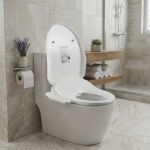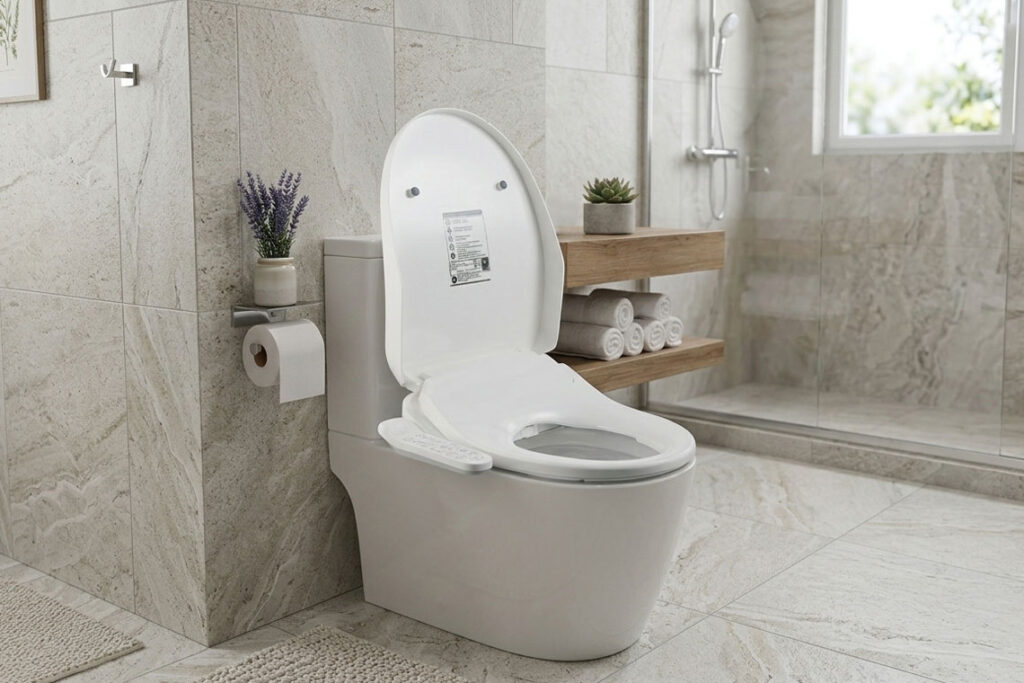
Pendant des années, the fully integrated smart toilet systems were widely seen as the ultimate upgrade for modern bathrooms. With automatic flushing, heated seats, and advanced hygiene functions, it represented the future of bathroom technology.
Yet in many markets today, the category is facing a quieter reality. While interest in smart bathrooms continues to grow, the adoption of fully integrated smart toilets has encountered several practical barriers—especially outside of Asia.
At the same time, another product category is quietly regaining momentum: the smart toilet seat solutions now being adopted by more households.
Once viewed as a simpler alternative, the smart toilet seat is now benefiting from improving technology, easier installation, and growing consumer familiarity. In many regions, it may even represent the most practical path forward for expanding the smart bathroom market.
The Promise of Smart Toilets — and the Practical Challenges
Integrated smart toilets offer an impressive user experience, but bringing them into everyday homes can be more complicated than many consumers expect.
One of the biggest barriers is installation complexity. Unlike conventional toilets, many smart toilet models require electrical connections, specific plumbing configurations, and in some cases structural adjustments to the bathroom layout. For new construction projects, this is manageable. For existing homes, however, the process can be far less straightforward.
Installation often involves multiple trades—plumbers, electricians, and sometimes additional renovation work. In markets such as North America and Europe, where labor costs are high, the installation expense can quickly add up.
In some cases, the total cost of installation and preparation may approach—or even exceed—the price of the product itself.
After-sales service presents another challenge. Integrated smart toilets combine plumbing, electronics, sensors, and heating systems within a single unit. When something requires repair or maintenance, specialized technicians are often needed. This increases service complexity for distributors and retailers alike.
These factors do not eliminate demand, but they can slow adoption, particularly among first-time buyers.
A Market Still Finding Its Balance
Another dynamic affecting the market is the rapid expansion of the smart toilet supply chain. As global demand increased over the past decade, many manufacturers entered the category, creating a wide spectrum of products across different price levels.
While this has broadened availability, it has also created significant variations in quality, features, and pricing. For consumers, the range of choices can be confusing. For distributors, it can make product selection and positioning more challenging.
Industry research from organizations such as Grand View Research has also pointed out that the global bidet and smart toilet market continues to grow, although adoption patterns vary widely by region.
The result is a market that continues to grow, but not always as smoothly as early expectations suggested.
Against this backdrop, a different type of product has begun to attract renewed attention.
The Quiet Return of the Smart Toilet Seat
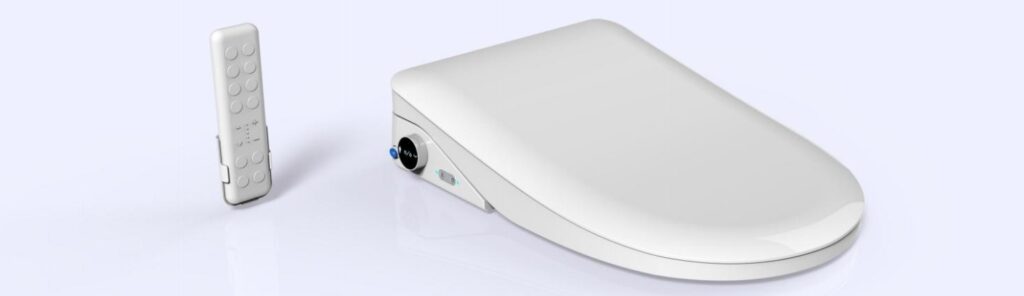
In many ways, the smart toilet seat offers a far more accessible entry point into smart bathroom technology.
First, there is the matter of installation simplicity. A smart toilet seat can typically be installed directly onto an existing toilet bowl, often using the same mounting points as a standard seat. In many cases, installation requires little more than basic tools and a nearby water connection.
For homeowners, this means minimal disruption. No renovation. No major plumbing adjustments. In many situations, the process can be completed in less than an hour.
The advantages extend beyond installation. From a service perspective, the smart toilet seat is also easier to maintain. If a unit requires replacement or servicing, it can usually be removed and exchanged without affecting the toilet itself. This reduces risk for both consumers and distributors.
Perhaps equally important is consumer familiarity. In markets such as the United States, Japan, and parts of Europe, bidet seats have already been present for years. Many households are now familiar with features such as warm-water washing, heated seats, and air drying. As awareness of hygiene technology continues to grow—often highlighted in industry discussions by groups like the National Kitchen & Bath Association—these products are increasingly seen as practical upgrades rather than unfamiliar innovations.
Technology Is Closing the Gap
Historically, smart toilet seats were often considered a simpler, less advanced option compared to integrated smart toilets. That gap, however, has narrowed significantly.
Today’s smart toilet seats offer a surprisingly comprehensive range of features. Heated seats, adjustable water temperature and pressure, self-cleaning nozzles, warm air dryers, and deodorization systems are now widely available. Design has also improved, with slimmer profiles and more refined aesthetics that better match contemporary bathroom styles.
For many users, these functions deliver the core benefits they are seeking: improved hygiene, comfort, and convenience.
In practice, the everyday experience provided by modern smart toilet seats can feel remarkably similar to that of a fully integrated smart toilet—particularly for households that are upgrading from traditional fixtures.
Distributors exploring this category can also explore our smart toilet seat range designed specifically for international bathroom markets.
A Natural Fit for E-Commerce
Another factor driving renewed interest in smart toilet seats is their logistical advantage.
Compared with integrated smart toilets, toilet seats are smaller, lighter, and far easier to transport. This reduces shipping costs and lowers the risk of damage during delivery. Storage and inventory management are also simpler for distributors and retailers.
These characteristics make smart toilet seats particularly well suited to e-commerce sales channels, which have become increasingly important in the bathroom product industry.
For online retailers, the ability to ship products efficiently and reliably is a major advantage. For consumers, the convenience of ordering a product that can be installed quickly at home makes the purchase decision far easier.
A Practical Entry Point for the Smart Bathroom
None of this suggests that integrated smart toilets will disappear. On the contrary, they remain an important part of the premium bathroom market, particularly in new construction projects and high-end residential developments.
However, for many households—and many distributors—the smart toilet seat represents a more practical starting point.
It requires less installation effort, carries lower logistical risk, and offers a familiar, approachable way for consumers to experience smart bathroom technology for the first time.
In that sense, the renewed interest in smart toilet seats is not a step backward. It is a natural stage in the evolution of the market.
As technology continues to improve and awareness grows, the smart toilet seat may well become one of the most effective gateways into the broader world of smart bathrooms. Businesses interested in this growing category are welcome to contact our team to discuss potential cooperation.