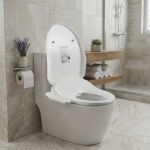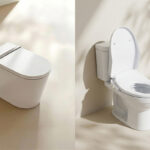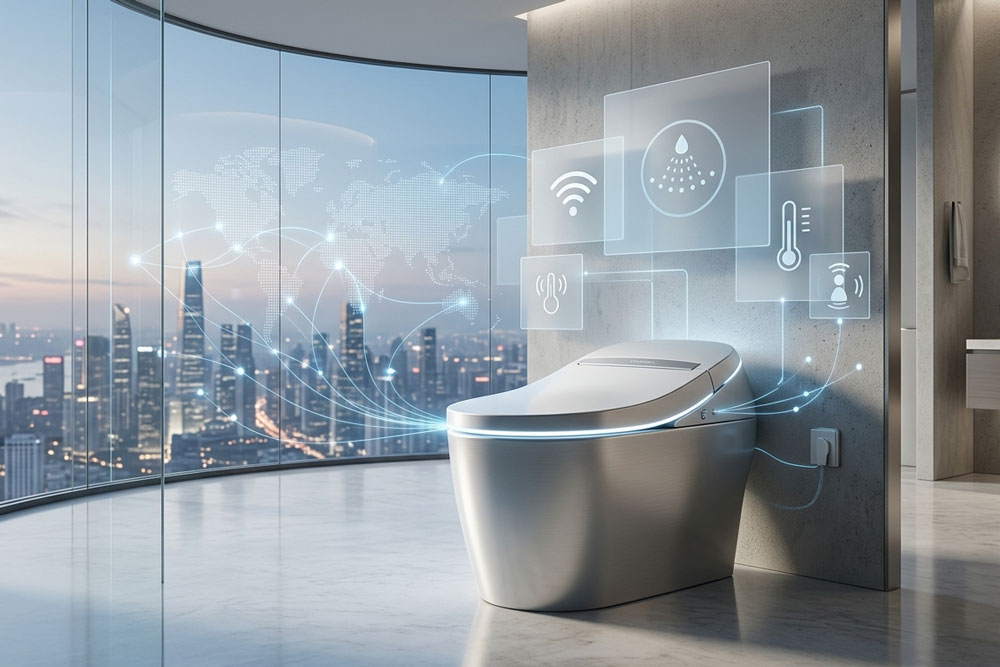
For years, the smart toilet industry has been framed as a competition between brands. Names like TOTO and Kohler are often treated as benchmarks, while a growing number of emerging brands compete for attention across e-commerce platforms and retail shelves.
But for distributors, importers, and private-label buyers, this perspective misses the bigger picture.
The global smart toilet market is not simply brand-driven—it is shaped by a complex ecosystem of technology leaders, channel-focused brands, and behind-the-scenes manufacturing giants. Understanding how these layers interact is far more valuable than any ranking.
A Quick Snapshot of the Global Landscape
Below is a simplified view of representative players across different segments of the industry:
| Segment | Representative Brands | Core Strength | What It Means for Buyers |
|---|---|---|---|
| Premium Technology Leaders | TOTO, LIXIL, Panasonic | Advanced hygiene tech, proprietary materials, smart home integration | Benchmark for product quality and innovation, but high cost and limited flexibility |
| Western Consumer Brands | American Standard, Brondell, BioBidet | Strong retail presence, user-friendly designs, retrofit solutions | Proven demand in North America; success depends on channel strategy |
| China Integrated Brands | JOMOO, Arrow, Midea | Scalable manufacturing, fast innovation cycles, competitive pricing | Ideal for volume and customization, but quality varies by supplier |
| ODM / OEM Powerhouses | Mazzam, iKAHE, Runner, R&T | Core manufacturing, engineering, and component supply | The real production backbone behind many global brands |
| Korea & Japan Specialists | Coway, INAX | Sterilization, nozzle precision, wellness-focused features | Strong in hygiene innovation and healthcare-oriented design |
This table is not about “who is best.” It reflects how the industry is actually structured.
Beyond Brands: The Real Structure of the Market
One of the most overlooked truths is that many well-known brands are not manufacturers.
In fact, a significant portion of smart toilets and bidet seats sold globally are produced by ODM factories such as Mazzam or iKAHE, sometimes under entirely different brand names.
This has two important implications:
- Product quality depends heavily on the factory behind the brand
- Two competing brands may actually share similar manufacturing origins
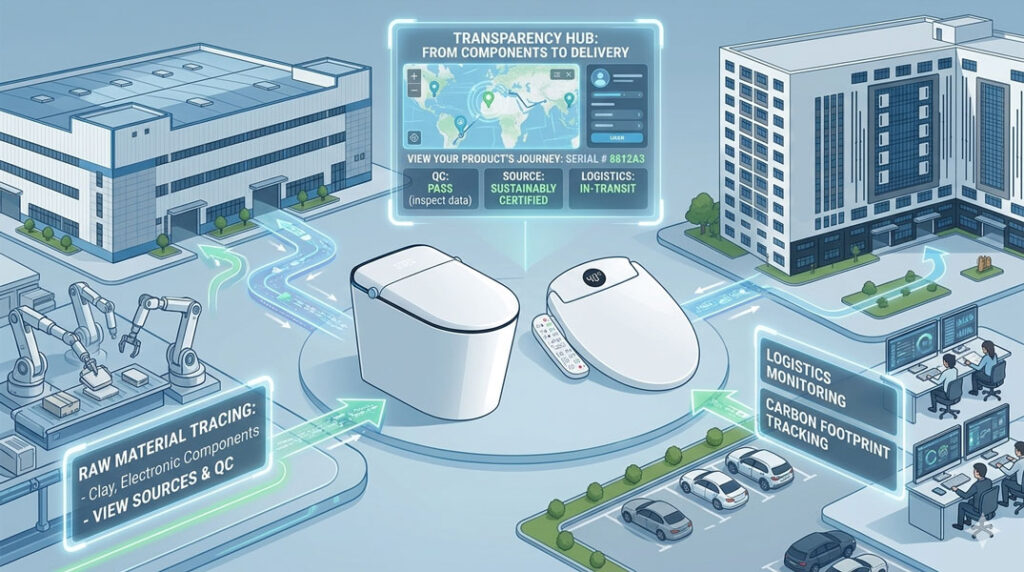
For buyers, this shifts the focus from branding to supply chain transparency.
Three Product Strategies Dominating the Market
Across regions, three distinct product directions are becoming clear:
1. Integrated Smart Toilets (Premium Segment)
Driven by companies like TOTO and Kohler, these products emphasize:
- seamless design
- advanced flushing systems
- full smart home integration
They set the standard—but also come with higher costs and stricter installation requirements.
2. Sièges de toilettes bidets (Mass Adoption Engine)
Popularized in North America by brands like BioBidet and Brondell, this category focuses on:
- easy retrofit installation
- affordability
- strong e-commerce performance
👉 Explore related solutions: Bidet Toilet Seats Collection
This segment continues to grow rapidly, especially among first-time users.
3. Compact & E-commerce-Oriented Models
Emerging brands are optimizing for:
- smaller living spaces
- plug-and-play usability
- aggressive online pricing
These products are less about technological breakthroughs and more about speed to market and cost efficiency.
Why ODM Selection Is Becoming a Competitive Advantage
Choosing the right manufacturing partner is no longer a back-end decision—it is a strategic one.
Not all factories offer the same capabilities. Key differentiators include:
- Electronic control systems (stability, safety features)
- Water system engineering (pressure consistency, spray precision)
- Certification readiness (ETL, CE, UL compliance)
- Design integration (slim profiles, modern aesthetics)
Factories like Runner and R&T specialize in high-precision components that directly impact product reliability.
What This Means for Distributors and Importers
If you are sourcing smart toilets today, the key question is no longer:
“Which brand should I choose?”
Instead, it becomes:
“What supply chain strategy best fits my market?”
A successful approach typically involves:
- balancing cost vs. feature positioning
- selecting factories with proven export experience
- aligning products with local certification requirements
- adapting SKUs for specific sales channels
Where Myway Smart Fits In
In a fragmented and often opaque industry, Myway Smart operates as a supply chain integrator rather than just a product supplier.
Instead of offering off-the-shelf solutions, the focus is on:
- curated manufacturing partnerships
- market-specific product selection
- compliance-ready configurations
- faster go-to-market cycles for distributors
👉 Learn more: About Myway Smart
👉 See how products are made: Visite d'usine
This approach helps bridge the gap between top-tier manufacturing capabilities and real-world market needs.
Final Thoughts: The Industry Is Evolving—Quietly
The smart toilet market is no longer defined by a handful of dominant brands. Instead, it is shaped by an evolving network of:
- technology leaders
- agile consumer brands
- and highly capable manufacturing partners
For buyers, success depends less on brand recognition and more on how well these pieces are connected.
Because in today’s market, the real competitive edge isn’t just the product.
It’s the system behind it.