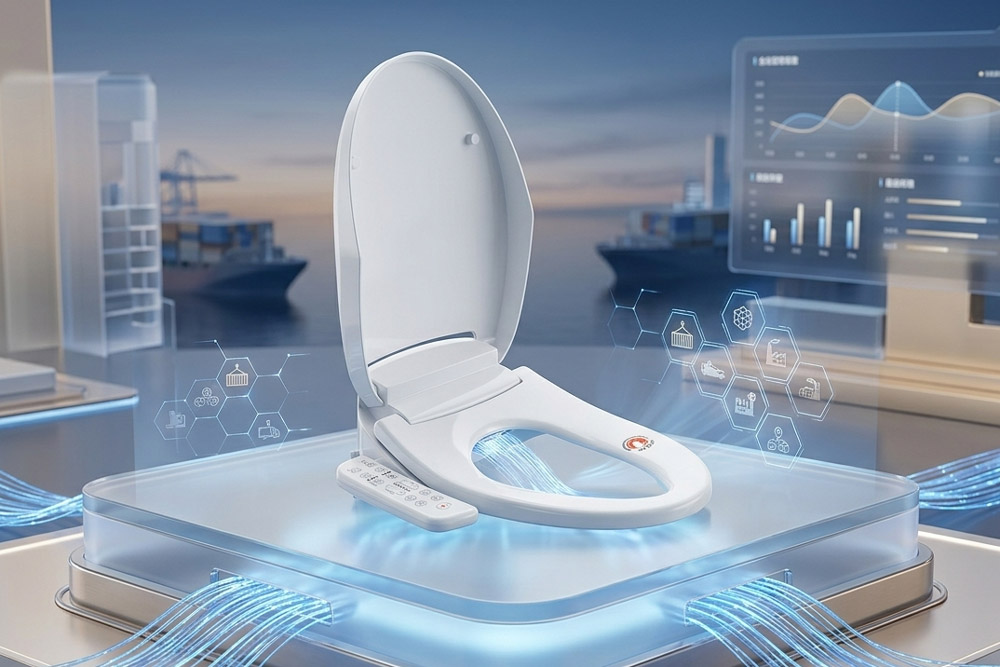
The smart toilet industry is no longer a niche upgrade category. It is a fast-scaling global segment moving toward hygiene automation and health-oriented bathroom systems.
وفق Custom Market Insights, the global smart toilet market reached USD 9.68 مليار في 2024 and is projected to grow at a 12.75% معدل نمو سنوي مركب, reaching USD 31.5 مليار بواسطة 2034.
للموزعين, المستوردين, and private-label brands, one conclusion is unavoidable:
Choosing the right smart toilet seat manufacturer is a strategic supply chain decision — not a price comparison exercise.
Below is a structured, data-backed framework to evaluate suppliers in 2026 and beyond.
1. Start with the Manufacturer’s Strategic Positioning
Before reviewing technical specs, assess who you are partnering with.
- Are they OEM-only or full ODM?
- Do they invest in R&D?
- Do they operate internationally?
- Are they transparent about their production capability?
A serious supplier will openly present its background, production footprint, and compliance positioning. For example, ماي واي الذكية outlines its company capabilities and international cooperation.
2. Understand Global Manufacturing Regions First
Before evaluating individual factories, understand the global production map.
Japan — precision and ultra-premium engineering
Japan pioneered the category. Brands like TOTO and LIXIL set the benchmark for:
- Sensor integration
- Quiet mechanics
- Water-saving engineering
- Extreme durability testing
Japanese factories represent the highest technical standard, but also the highest production cost.
China — scale, speed and ODM leadership
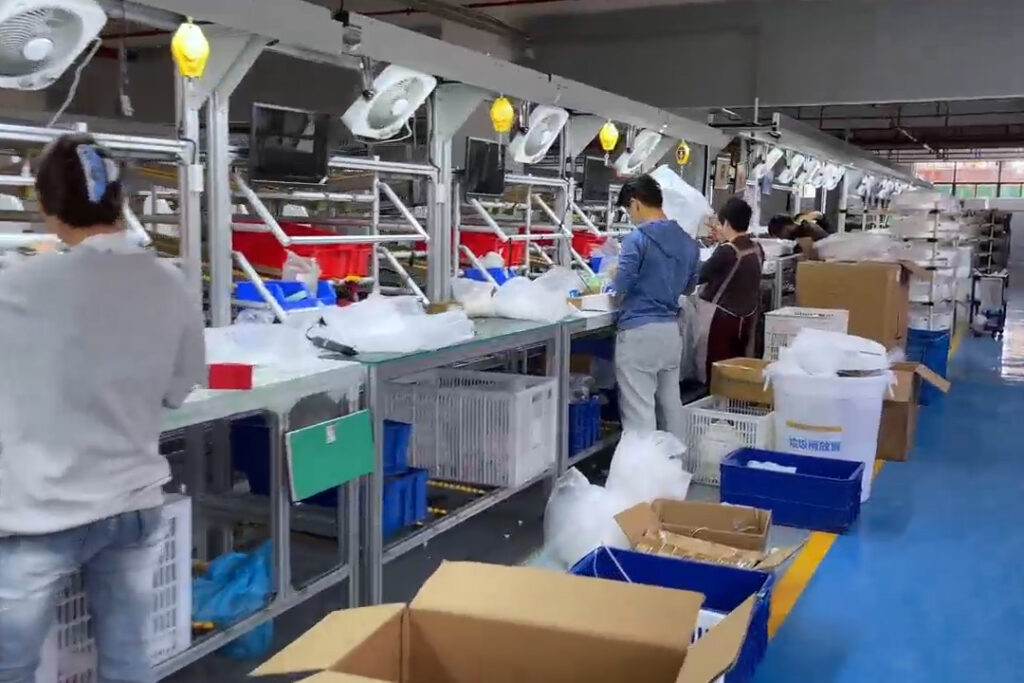
China is now the largest global production base.
Three clusters dominate:
| Cluster | Strength |
|---|---|
| تايتشو | cost efficiency & supply chain integration |
| شيامن | ر&D, تقنية التدفئة الفورية, ODM cooperation |
| تشاوتشو | ceramic manufacturing depth |
For most distributors and private-label brands, Chinese ODM manufacturers offer the best balance of ابتكار + scalability + يكلف.
Korea — wellness & filtration focus
Korean manufacturers stand out for:
- Built-in water filtration
- Compact appliance-style design
- App and UI innovation
Understanding these regional differences helps you shortlist the right supplier profile before deeper audits.
3. Evaluate Production Capacity & Supply Stability
If you plan to sell through retail chains or distributors, production capacity becomes critical.
Industry benchmark:
- Competitive factories produce 10,000+ units per month
- Multiple automated lines
- SMT PCB production in-house
Electronics instability often originates from poor humidity control during assembly. A professional factory environment is non-negotiable.
4. Audit the Quality Management System (Beyond ISO)
ايزو 9001 certification alone does not guarantee reliability.
Look for:
100% Water + Power Testing
Each unit should undergo:
- Waterproof verification (IPX4/IPX5 minimum)
- Insulation resistance testing
- Full function simulation before packing
Traceability
PCB batches, heating modules, and sensors must be serial-tracked.
Reliability Testing
Top-tier factories conduct:
- 900+ cycle aging tests
- 1.5x seat load testing
- Continuous nozzle extension testing
This is where many suppliers quietly fail.
5. Check the Engineering & ر&D Depth
The future of smart bathrooms will be decided by R&D — not assembly.
A competitive bidet toilet seat manufacturer typically has:
- 50+ engineers
- المستقلة ر&D center
- Core PCB development capability
Key innovation areas to ask about:
- Heating algorithms
- Sensor calibration
- Energy optimization
- Customization flexibility
If you plan private labeling, strong ODM capability is non-negotiable.
6. Understand the Core Technology Stack
التدفئة الفورية مقابل تسخين الخزان
Instant heating has become the industry standard.
| Feature | Instant Heating Advantage |
|---|---|
| صحة | No standing water → no bacteria growth |
| Experience | مياه دافئة غير محدودة |
| Energy | No standby heating power |
Water temperature stability should stay within ±2°C.
Flushing & Water Engineering
Modern smart toilet seats increasingly integrate:
- Self-priming pumps for low water pressure areas
- Dual-flush technology (3.8–4.8L per flush)
These features matter especially for hotels and apartments.
Sensor Technology Matters More Than You Think
Premium manufacturers now use:
- Infrared sensors → entry level
- Laser sensors → mid-range
- Microwave radar → flagship models
Radar sensors enable true hands-free automatic lid opening, even through ceramic.
7. Hygiene Technology Is Becoming a Differentiator
The industry is moving from cleaning → sterilization → health monitoring.
Look for:
Electrolyzed water sterilization
Produces hypochlorous acid water to sanitize:
- bowl surface
- nozzles
UV-C nozzle sterilization
Kills 99.9% of bacteria after each use.
Antibacterial materials
Premium factories use silver-ion materials certified by SIAA.
These technologies are becoming essential for premium positioning.
8. Certifications Decide Your Market Access
Without the right certifications, you simply cannot sell.
أمريكا الشمالية
Required:
- cUPC (سلامة السباكة)
- أول / إيتل (السلامة الكهربائية)
Important:
- WaterSense improves retail acceptance.
أوروبا
Required:
- م (لفد + إي إم سي)
- بنفايات
- EN1717 backflow prevention
Middle East & أستراليا
- SASO / G-Mark
- العلامة المائية
Certification requirements are detailed in multiple industry reports, مشتمل ResearchAndMarkets. Always verify that certifications belong to the exact model — not a similar SKU.
9. OEM vs ODM vs Private Label — Choose the Right Model
تصنيع المعدات الأصلية
You provide full technical drawings. Highest control, highest cost.
أوديإم (most common)
- Manufacturer provides mature platform.
- You customize appearance, logo, features.
- Fastest time-to-market.
Private label
- الشعار + packaging customization.
- Best for distributors entering the market quickly.
Most new brands start with ODM and evolve later. For distributors entering European markets, reviewing real case studies is helpful: German Distributor Success Case
10. Supply Chain Resilience Is Now a Major Factor
Recent manufacturing data (Fictiv 2025 Manufacturing Report) shows:
- Core component price increases ~15%
- Growing tariff volatility
- Increasing ESG compliance pressure
Strong manufacturers now demonstrate:
- Multi-country assembly capability
- Strategic component inventory (3+ months)
- Backup PCB suppliers
These factors directly affect your landed cost stability.
11. Conduct a Real Factory Audit
Before signing any contract, conduct:
On-Site Observations
- ESD control on SMT lines
- Injection molding surface finish consistency
- Waterproof negative pressure testing equipment
Documentation Review
- First Article Inspection (FAI) reports
- CAPA corrective action logs
- Employee skill training records
After-Sales Capability
- Multilingual manuals
- Spare parts kits (~5% ratio)
- Remote training support
This is where real partnerships begin.
Final Decision Framework
When selecting a smart toilet seat manufacturer in 2026, prioritize:
- Certification coverage
- ر&D capability
- Instant heating technology maturity
- Supply chain resilience
- Factory transparency
- Long-term partnership mindset
Smart toilet seats are no longer simple bathroom accessories — they are integrated electronic appliances operating in humid environments under strict regulatory standards.
Choosing the right partner determines your brand’s defect rate, compliance risk, and reputation.
If you are currently evaluating sourcing options or planning market expansion, you can initiate a technical discussion with us. Contact us now.
التعليمات
-
What is the minimum order quantity for ODM smart toilet seats?
Typically 200–500 units per model depending on customization scope.
-
How long does development take?
Standard ODM customization takes 60–120 days including packaging and compliance adjustments.
-
Are instant heating systems mandatory now?
نعم, they have largely replaced tank systems due to hygiene and energy efficiency advantages.
-
Can one certification cover multiple models?
Only if models share identical internal structure and testing parameters. Always verify certificate scope.
-
How can I verify factory authenticity remotely?
Request live video audits, third-party inspection reports, and traceable certification documents.